Impact
The largest HIV-prevention program in Eastern Europe and Central Asia (EECA) implemented by the International HIV/AIDS Alliance in Ukraine with support of the Global Fund, has proven its success. The prevention program has supported provision of services since 2004, including syringe exchange, information materials, condoms, HIV and sexually transmitted infection rapid testing and counseling. These have reached 196,992 people who inject drugs, 37,061 commercial sex workers and 28,800 men who have sex with men in over 300 cities throughout Ukraine in 2014.
More than ten years after the program’s launch, the results demonstrate its influence on Ukraine’s HIV epidemic, especially among people who inject drugs (PWID), the population driving HIV in Ukraine. New HIV infections among PWID (measured through the proxy incidence indicator of HIV prevalence among PWID who initiated drugs injecting less than three years ago) fell from 29.9% in 2004 to 3.5% in 2013, and the number of newly registered HIV cases among PWID dropped from 6,558 in 2008 to 4,670 in 2014 (excluding AR Crimea and Sevastopol) (fig. 1).
(fig. 1).
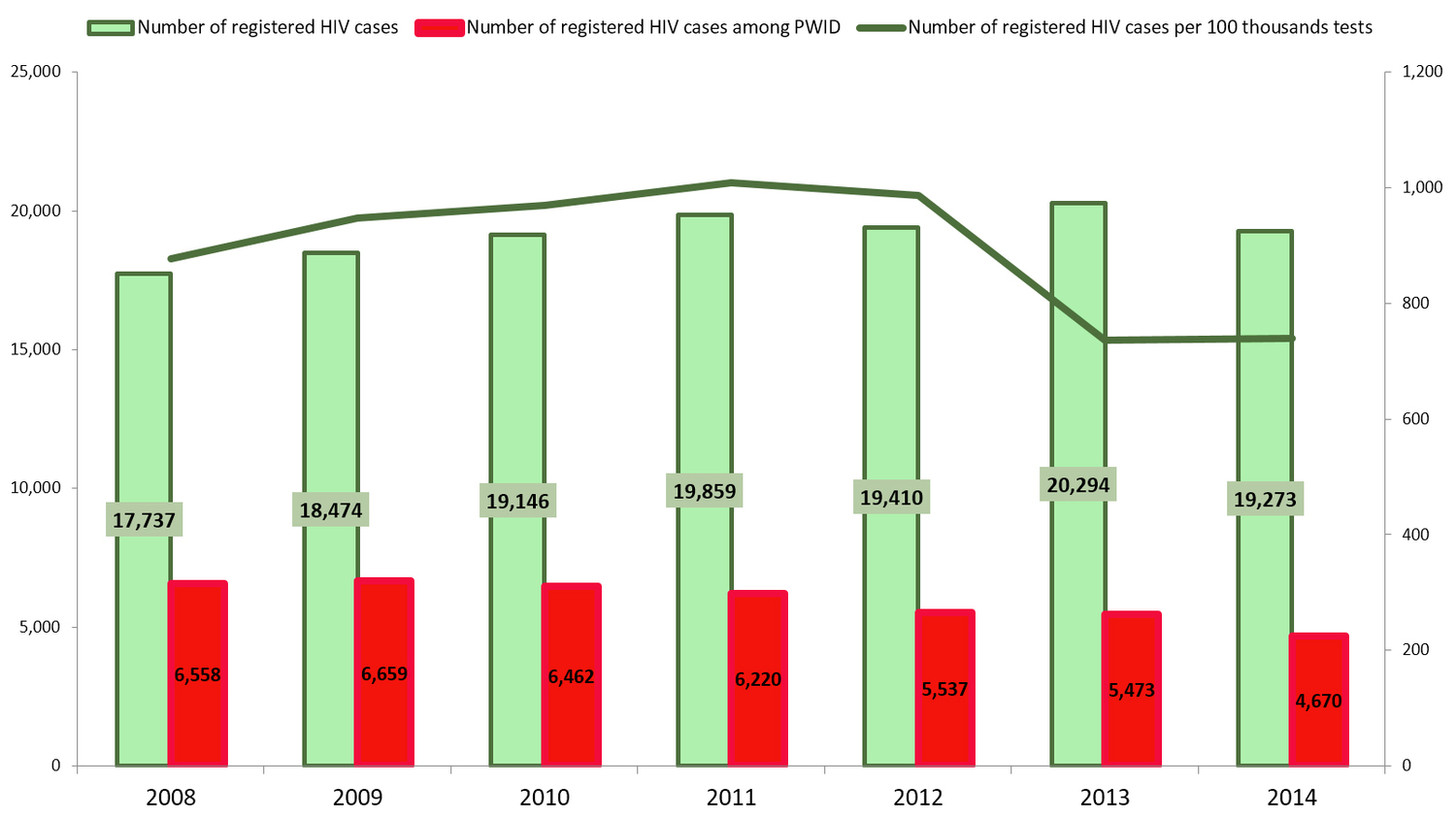
Fig. 1. Officially registered HIV cases in AIDS clinics, annual indictors 2008-2014
In addition, cohort study among prevention program clients indicates that HIV incidence rate among PWID has decreased almost three fold in the timeframe between three waves of follow-up measurements over a period of one and a half years (1.31% to 0.42 %) from October 2013 to June 2015. Such tendency also suggests that longer exposure to prevention interventions impacts the knowledge and motivation of clients to the safer behavior.